Since the COBRE on Opioids and Overdose’s inception in 2018, it has supported over 35 Investigators, 9 Pilot Projects, 4 Research Projects and 3 Research ‘Cores.’
Please explore the projects below.


Since the COBRE on Opioids and Overdose’s inception in 2018, it has supported over 35 Investigators, 9 Pilot Projects, 4 Research Projects and 3 Research ‘Cores.’
Please explore the projects below.










Other COBRE Supported Projects
In addition to providing funding and mentorship to COBRE Junior Investigators, the COBRE also supports smaller, short-term projects related to opioids and overdose. Below are some of our current and past COBRE-supported projects and partnerships.
5/1/2021 – 9/21/2021
Geoff Capraro, MD, MPH, Assoc. Prof. Brown Emergency Medicine
Ana Bess Moyer Bell, MA, RDT, Founder, Exec. Director COAAST
Production of two maximum impact stigma reduction narrative vignette videos. The videos will use ethnographic data from people with lived experience and Rhode Island experts in opioid education and naloxone distribution, harm reduction, and recovery to create the video. These videos will utilize drama therapy, the theory of planned behavior and other narrative and public health methods, to optimize stigma reduction. The direct outcome of the video will be to reduce stigma felt by the general public in Rhode Island towards the opioid epidemic and people experiencing overdoses. While the video will be attached by QR code to areas in the community, such as bus stops and train stations, NaloxBoxes, and other highly trafficked areas, it will be available to anyone regardless of whether they scan the QR code in the community or find the video online. to be added in and around the New England area.
3/15/2021 – 8/31/2021
RICARES and Dr. Alexandra Collins, Brown University
This exhibition will broaden the discussion around harm reduction interventions across Rhode Island’s many communities. The exhibition will present an accurate portrayal of a potential OPS model and its function and features; its goal is to demystify popular myths about these spaces and foreground the benefits of such interventions in saving lives. The exhibition would be located in the RICARES gallery, which features floor-to-ceiling windows and is situated at street-level on Mathewson Street in Downtown Providence. This placement maximizes the exhibitions’ visibility and allows the community to see the mock OPS while maintaining COVID safety procedures. Exhibition attendees will also be able to schedule appointments to view the exhibition during pre-determined gallery hours, staffed by RICARES’ team.
1/1/2021 – 11/1/2022
Dr. Rahul Vanjani, RI Hospital
The objective of the present study is to examine the preliminary association of the COVID-19 pandemic with the provision of buprenorphine treatment and patient-level outcomes across three outpatient buprenorphine clinics affiliated with the largest hospital system in the state of Rhode Island. We hypothesize there are time-sensitive changes that are occurring to buprenorphine treatment as a result of COVID-19. Information obtained through this study will identify key factors that may influence implementation of a low threshold approach following the COVID-19 pandemic. Additionally, this proposal seeks to empirically evaluate a) changes to buprenorphine prescribing practices and treatment, and b) how changes to the delivery of care impact patient-level outcomes. Results of this study may be leveraged to inform best-practice guidelines for buprenorphine prescribing to ensure safety and efficacy of OUD treatment.
11/1/2019 – 5/1/2020
Dr. Noah Rosenberg, The Miriam Hospital
 The opioid epidemic in the United States continues to grow1 and evidence suggests that rural areas are disproportionately affected2. Although there is extensive heterogeneity within this trend, a rural burden is especially prominent in New England.3 Buprenorphine, an effective treatment for opioid use disorder (OUD), may be particularly difficult to deliver to rural areas due to lack of rural-based buprenorphine prescribers4. Urban Emergency Departments (EDs) have been shown to provide an important link to initiation of buprenorphine treatment5, however little is known regarding the extent to which ED-initiated buprenorphine is available in rural areas or the barriers and facilitators to starting such a program. These factors may be substantially different from those faced by an urban center due to the small scale and financially tenuous position of many rural hospitals6,7. Other investigators have conducted qualitative analysis of barriers and facilitators to buprenorphine treatment in the rural primary care setting,8 but no similar assessment has been conducted for emergency departments. The objective of the proposed study is to develop a context-rich analysis of barriers and facilitators to ED-initiated buprenorphine in rural New England from the perspective of emergency department directors at these sites, the professionals best situated to comment on potential benefits and challenges. This will be a qualitative, interview-based study with thematic analysis of interview transcripts to provide a context-rich perspective on the emergency department response to the opioid crisis in rural New England. This initial study is based on clinical experience suggesting that rural New England emergency departments face a unique set of challenges in the implementation of programs to provide buprenorphine induction to patients in need. This study will provide a foundation upon which future work can build.
Affiliated Projects
Hackathon and Studios Projects
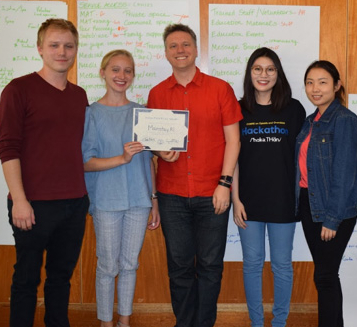
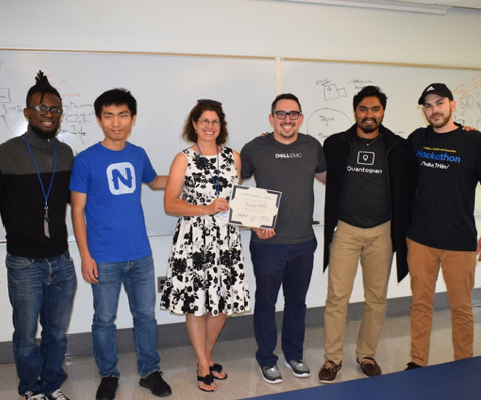
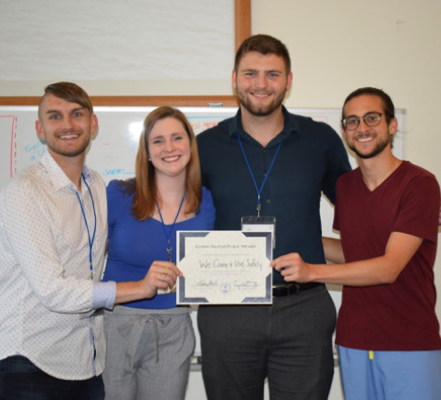
The Translational & Transformative (T2) Research Core of the COBRE hosts a bi-annual overdose hackathon, strategic design studios, and other interactive and interdisciplinary events to incubate novel research and project ideas related to opioids and overdose and as a means to encourage community engagement and participation.
2019 COBRE Hackathon Winners
2021 COBRE Hackathon Winners


2/1/2021 – 8/30/2021
Justin W. Cook, Founding Director, Tim Maly, Senior Lead, Toban Shadlyn, Strategic Designer & Researcher
In 2021, the COBRE’s Translational & Transformative (T2) Core partnered with the Center for Complexity (CfC) at Rhode Island School of Design on a 6-month interdisciplinary strategic design studio endeavor to address the overdose crisis: a process of collaborative problem-solving, rapid prototyping, and implementation utilized by designers and researchers to address complex societal challenges. Over July and August 2021, 14 diverse participants were virtually convened over 16+ hours and proposed five innovative solutions.
Rhode Island Hospital
1125 N Main Street, Suite 215
Providence, RI 02906
401-793-4785
opioidcobre@brownhealth.org